
Next-Gen Library Instruction
Leveraging Generative AI Technologies


Enhancing Library Instruction with Generative AI
I find generative AI immensely helpful in “doing more with less.” It saves me time by helping with the mundane tasks of creating instructional materials and with my job, giving me more time to devote to other tasks that I need to put more thought and care into.
Library instruction is a cornerstone of academic libraries, focusing on teaching information literacy, research skills, and effective use of library resources. Generative AI can significantly enhance these instructional efforts in several ways:
Personalized Instructional Support
Generative AI can provide personalized tutoring sessions to students, adapting to their learning paces and styles. By analyzing students' interactions and performance, AI can identify areas where they may need additional support and offer tailored guidance, exercises, or resources to strengthen their research and information literacy skills.
Identifying and Addressing Learning Gaps
AI can analyze data from various interactions, such as library resource usage, assignment submissions, and participation in instructional sessions, to identify areas where students may lack understanding.
Have you ever created a pre or post-survey for a course? You can upload the results and ask ChatGPT to analyze them. I have done this for two semesters, and ChatGPT noticed a couple of trends that I did not, which helped me improve the course modules.
Targeted Interventions: Once a learning gap is identified, AI can recommend specific resources, tutorials, or exercises to help bridge that gap. For instance, if a student consistently performs poorly in evaluating sources, the AI can suggest specialized workshops or reading materials on source evaluation techniques.
I have found Claude and Perplexity to be much better in this category, but ChatGPT has provided some interesting ideas on bridging gaps in the pre and post-course survey analysis.
Interactive Learning Modules
AI can help develop interactive, engaging learning modules that simulate real-world research scenarios. These modules can guide students through the research process, from formulating research questions to evaluating sources and citing references correctly. Interactive AI-driven tutorials can make learning more dynamic and responsive than traditional, static instructional materials.
Simulated Research Scenarios
AI can develop simulated research environments where students practice real-world research tasks. These simulations include formulating research questions, conducting literature reviews, evaluating sources, and managing citations. By interacting with these realistic scenarios, students gain hands-on experience that enhances their research skills in a controlled, risk-free setting.
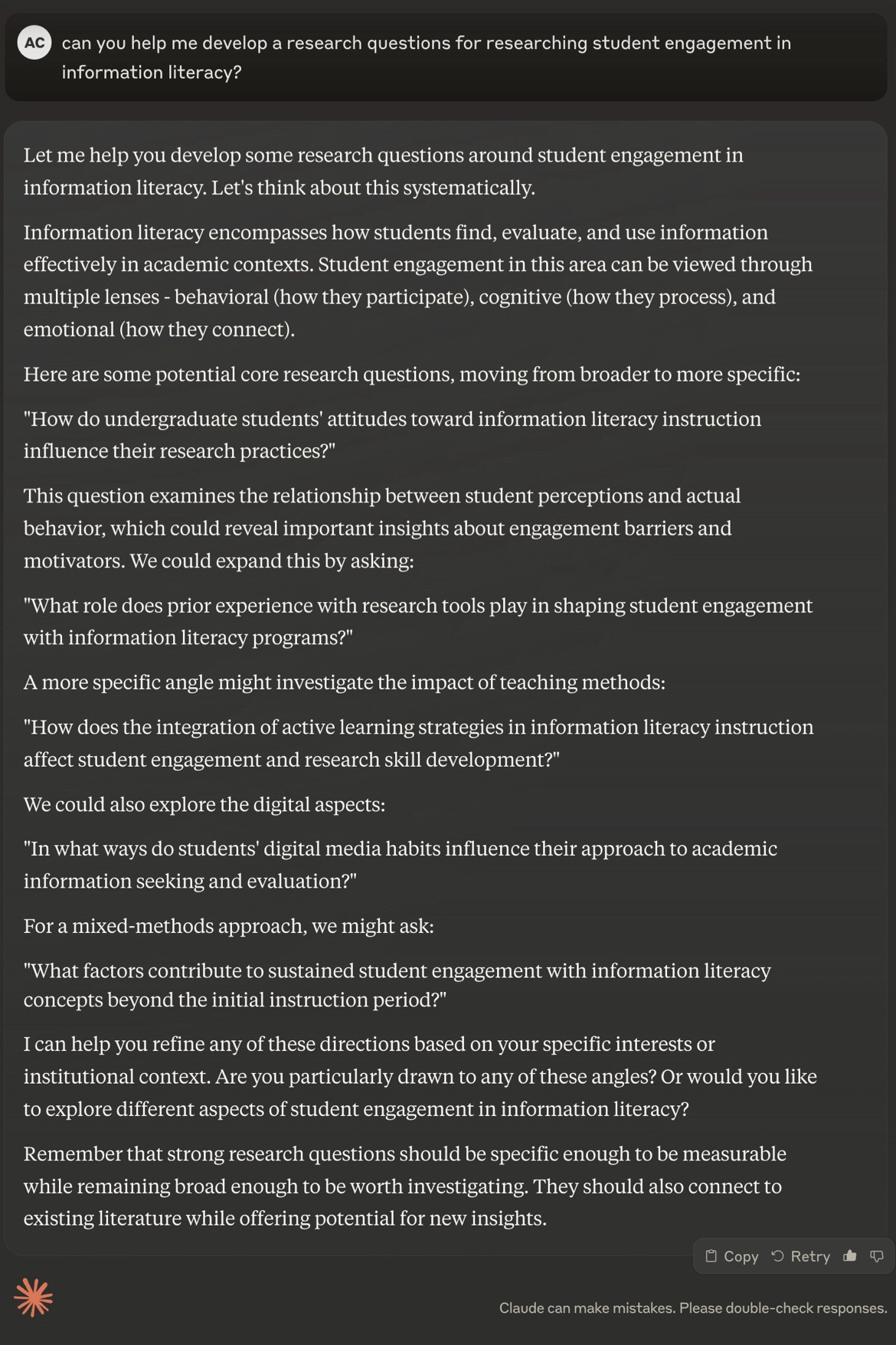
To demonstrate an example, I asked Claude to develop research questions to help me research student engagement when teaching information literacy. It listed several, moving from general to more specific, which can help students and faculty narrow research topics, which I find is one of the most common problems students have with researching.
Interactive Quizzes and Assessments
Generative AI can design and administer interactive quizzes that provide immediate feedback. These assessments can adapt their difficulty based on the student’s responses, ensuring the material remains challenging yet achievable. Additionally, AI can analyze quiz results to identify common areas of difficulty, allowing instructors to address these topics more effectively in their teaching.
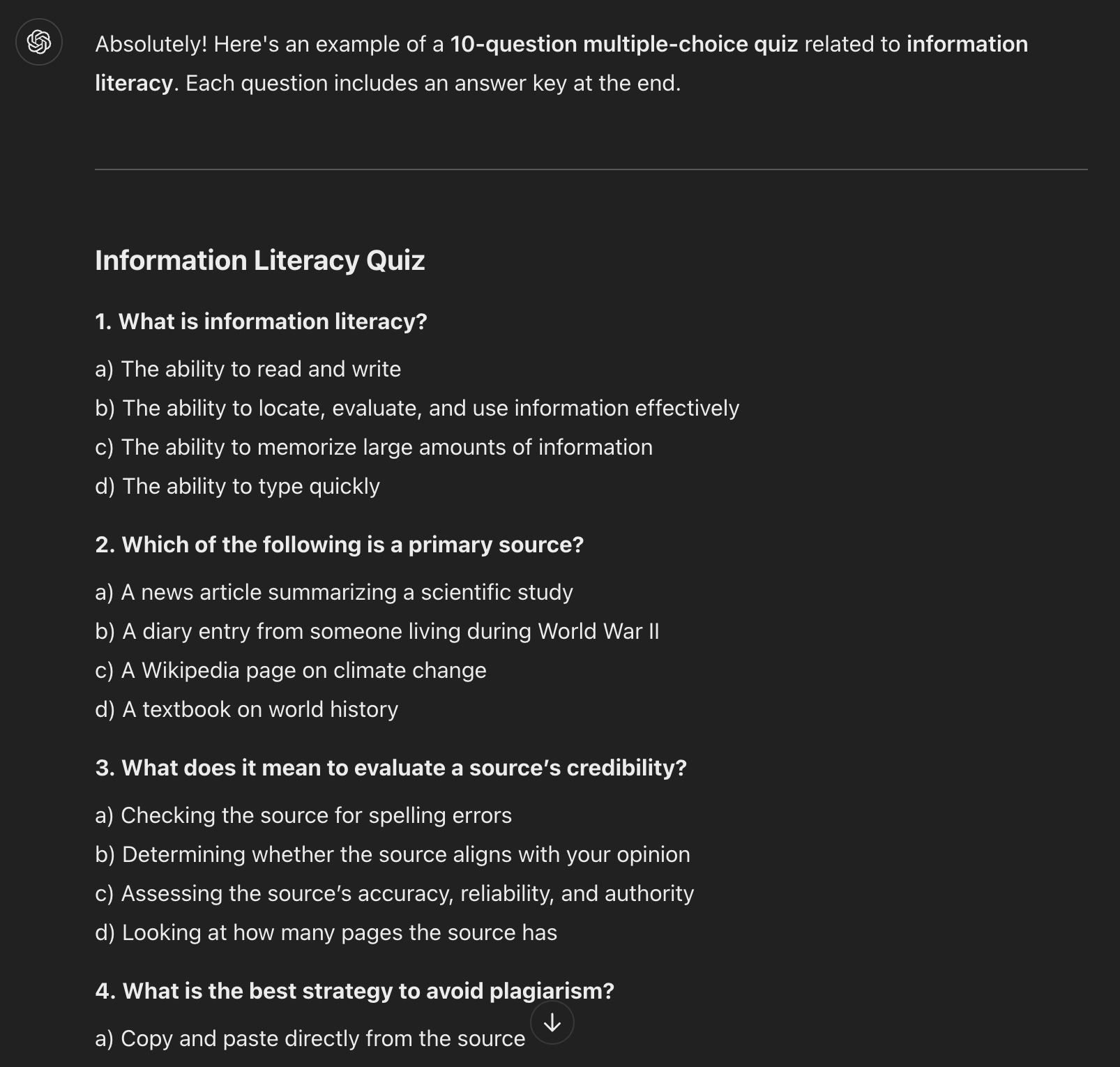
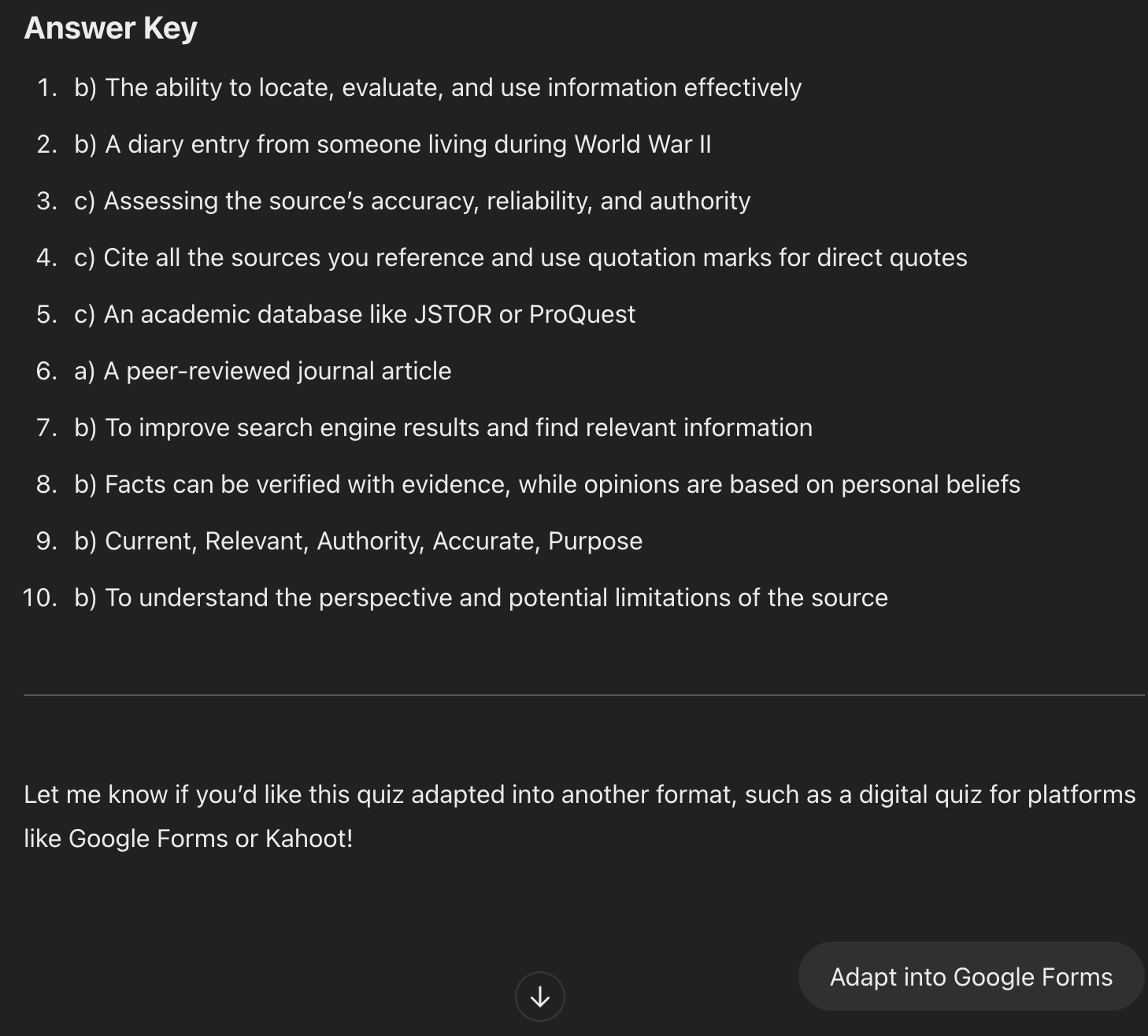
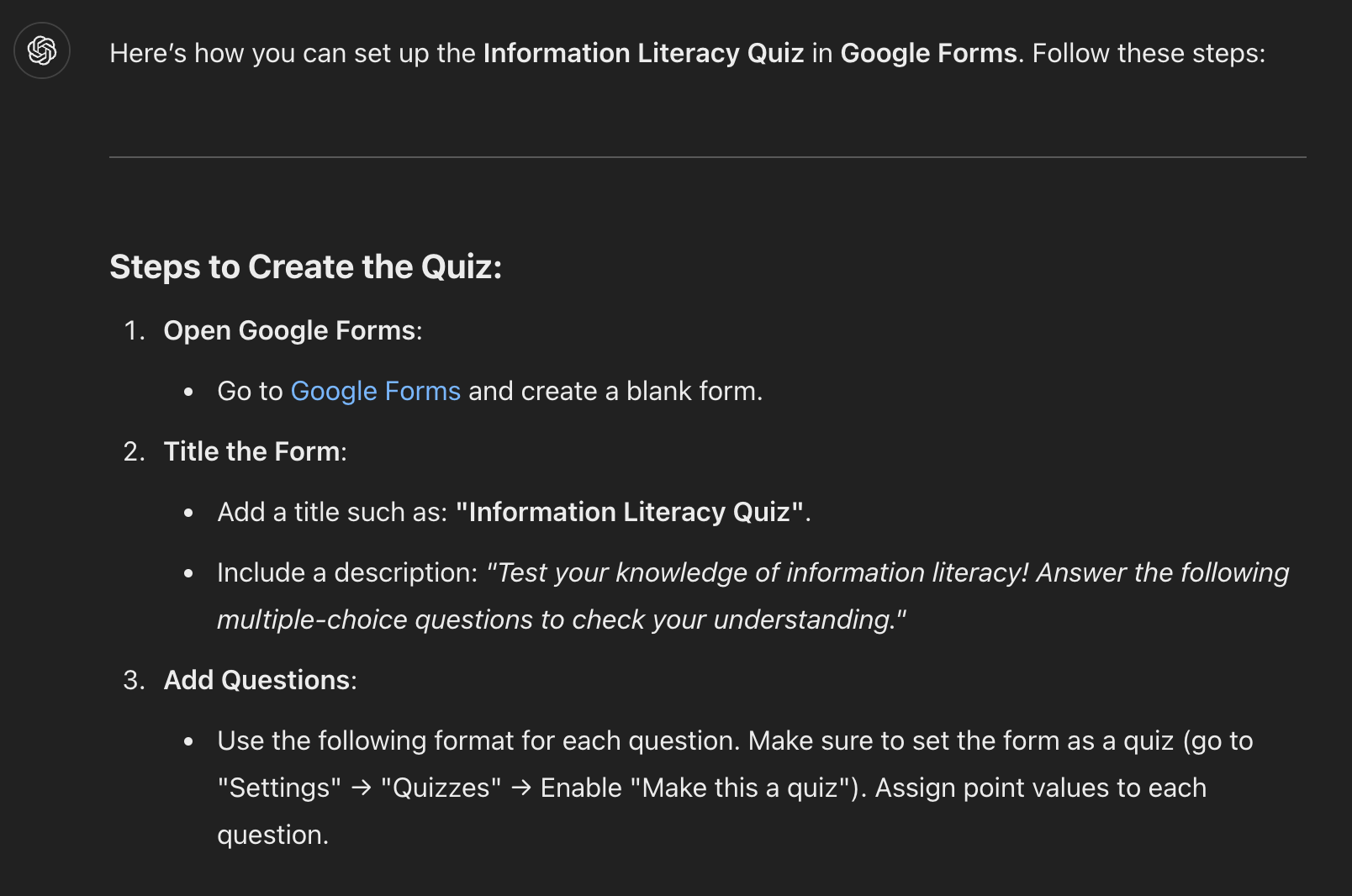
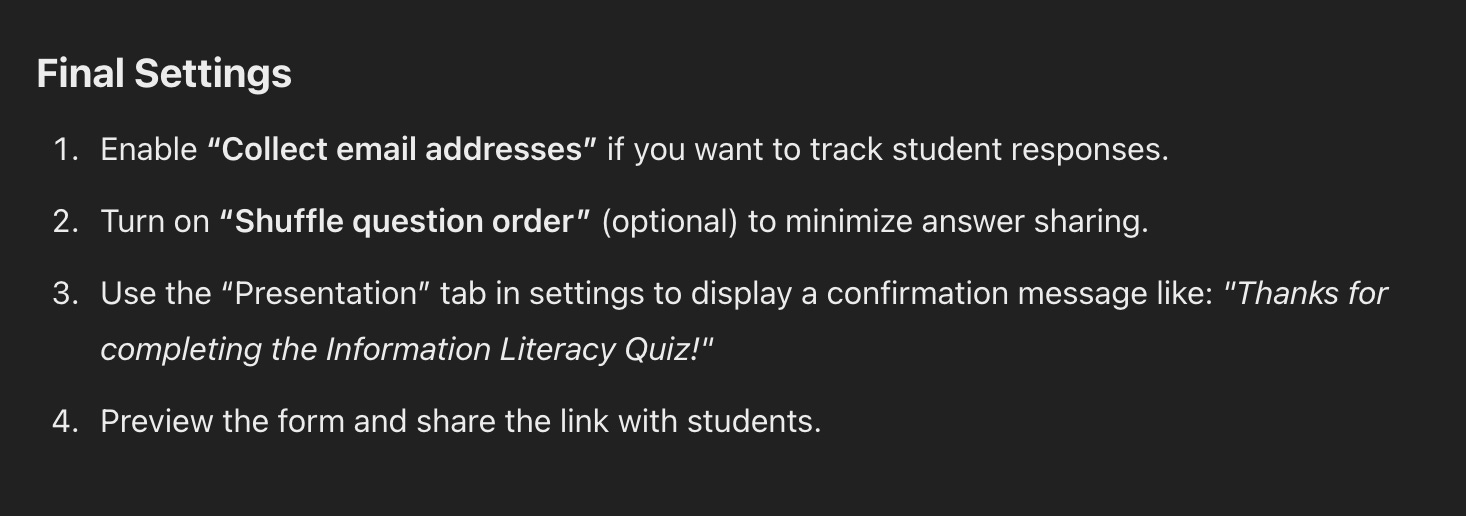
ChatGPT can even generate questions, an answer key, and instructions on creating the quiz in Google Forms and Kahoot. Below, I asked ChatGPT to generate a quiz about information literacy and provide instructions on building it in Google Forms.
Multimedia Content Generation
AI can generate diverse multimedia content such as videos, infographics, and interactive diagrams to complement textual information. For example, a module on citation management could include AI-generated animated tutorials that visually demonstrate how to use different citation styles. This variety caters to learning preferences and can make complex information more accessible and engaging.
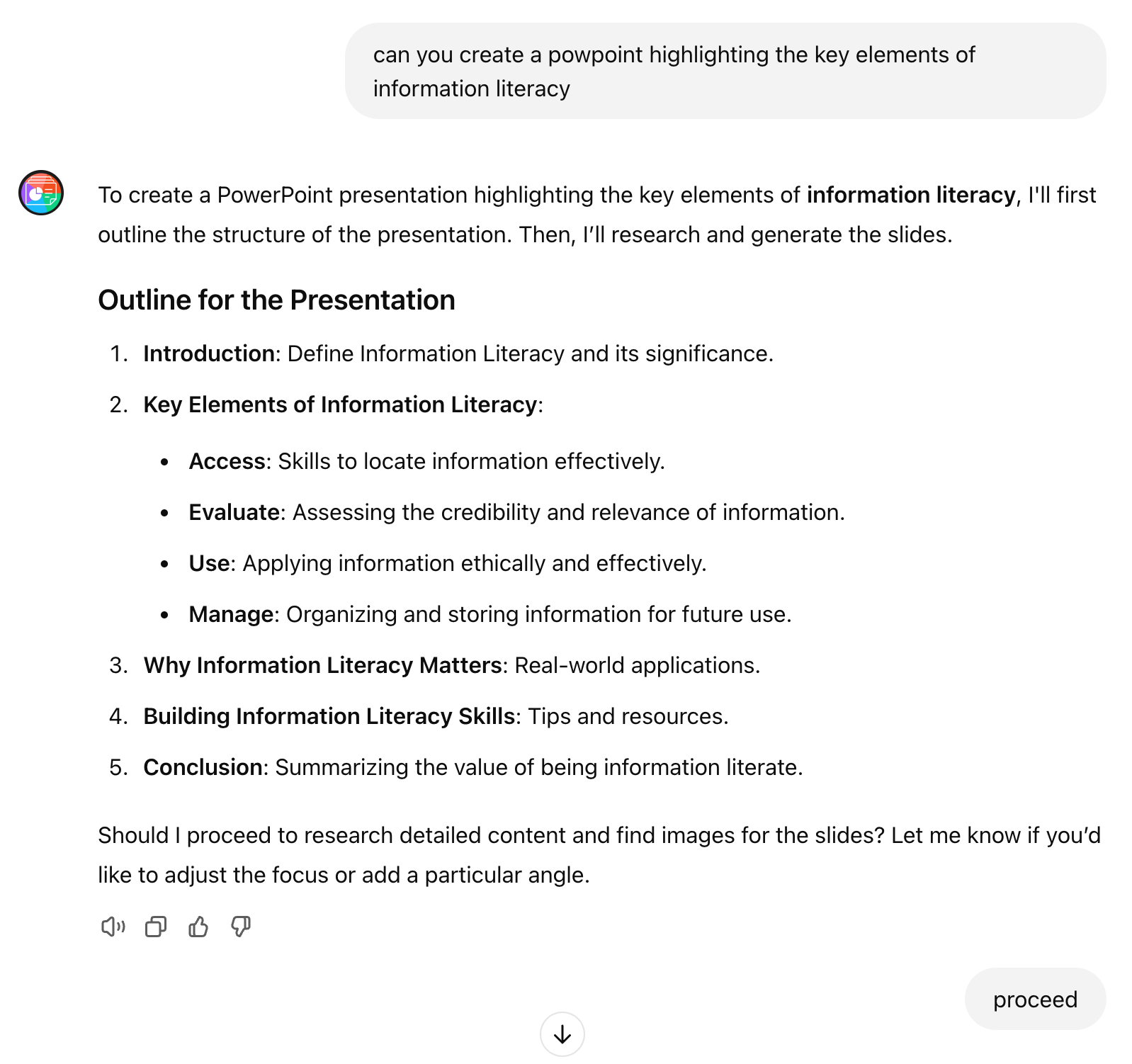
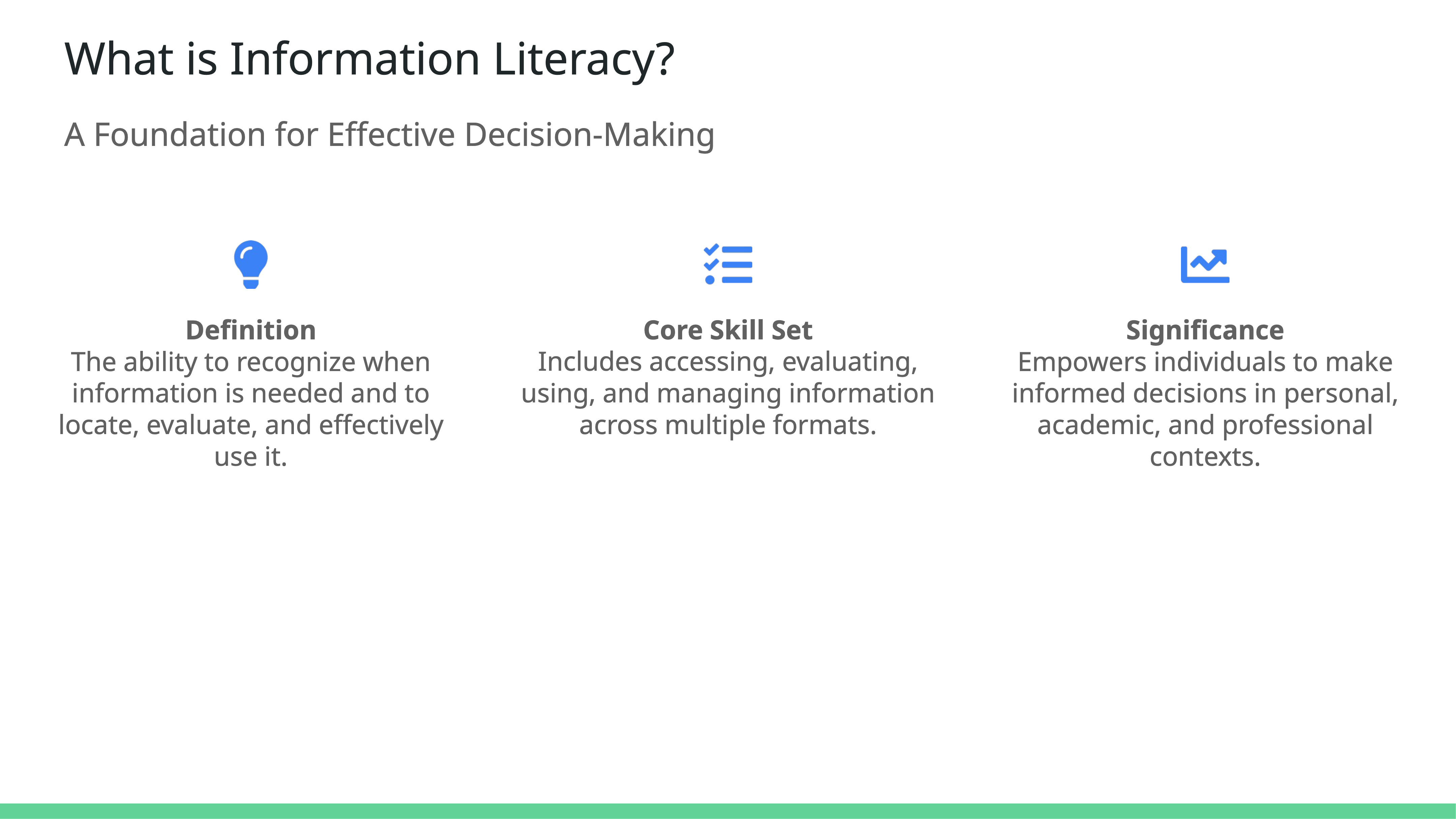
Think about all the content you would love to create for one-shot or complete courses but do not know how to do it or do not have the time. AI can help with most of these tasks and tweak them to your specifications. ChatGPT can even generate PowerPoint presentations.
There’s a few steps to it but to show in just a couple of screenshots, here’s a quick example of a PowerPoint created quickly with the prompt:
Can you create a powpoint highlighting the key elements of information literacy?
ChatGPT has several generators for different tasks. Click on Explore GPTs then the Presentation and Slides GPT.
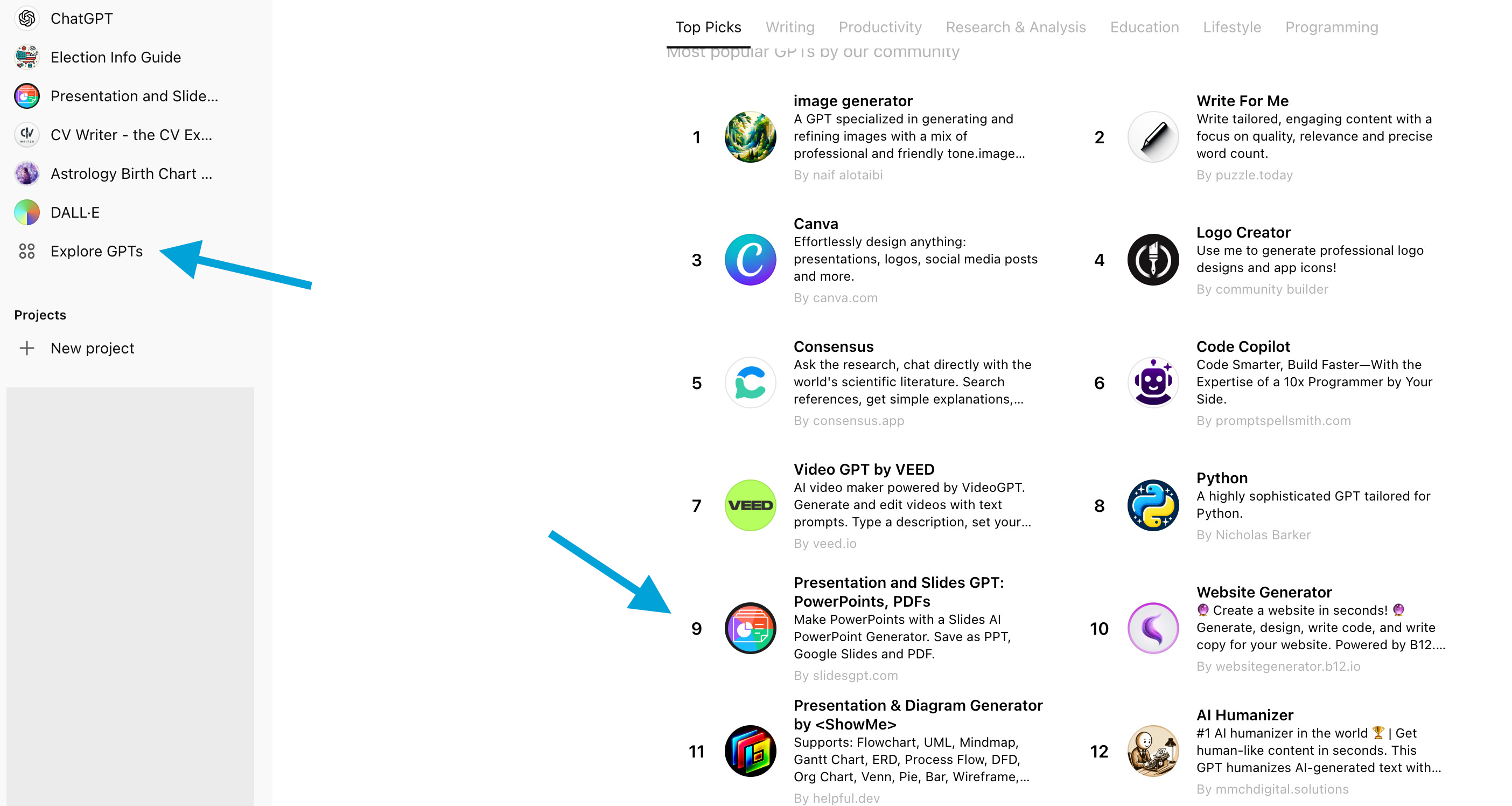
Then, it will take you to another screen where you type in the prompt. It will give you an outline that you can adjust to and then generate slides that you can edit. An example is below.
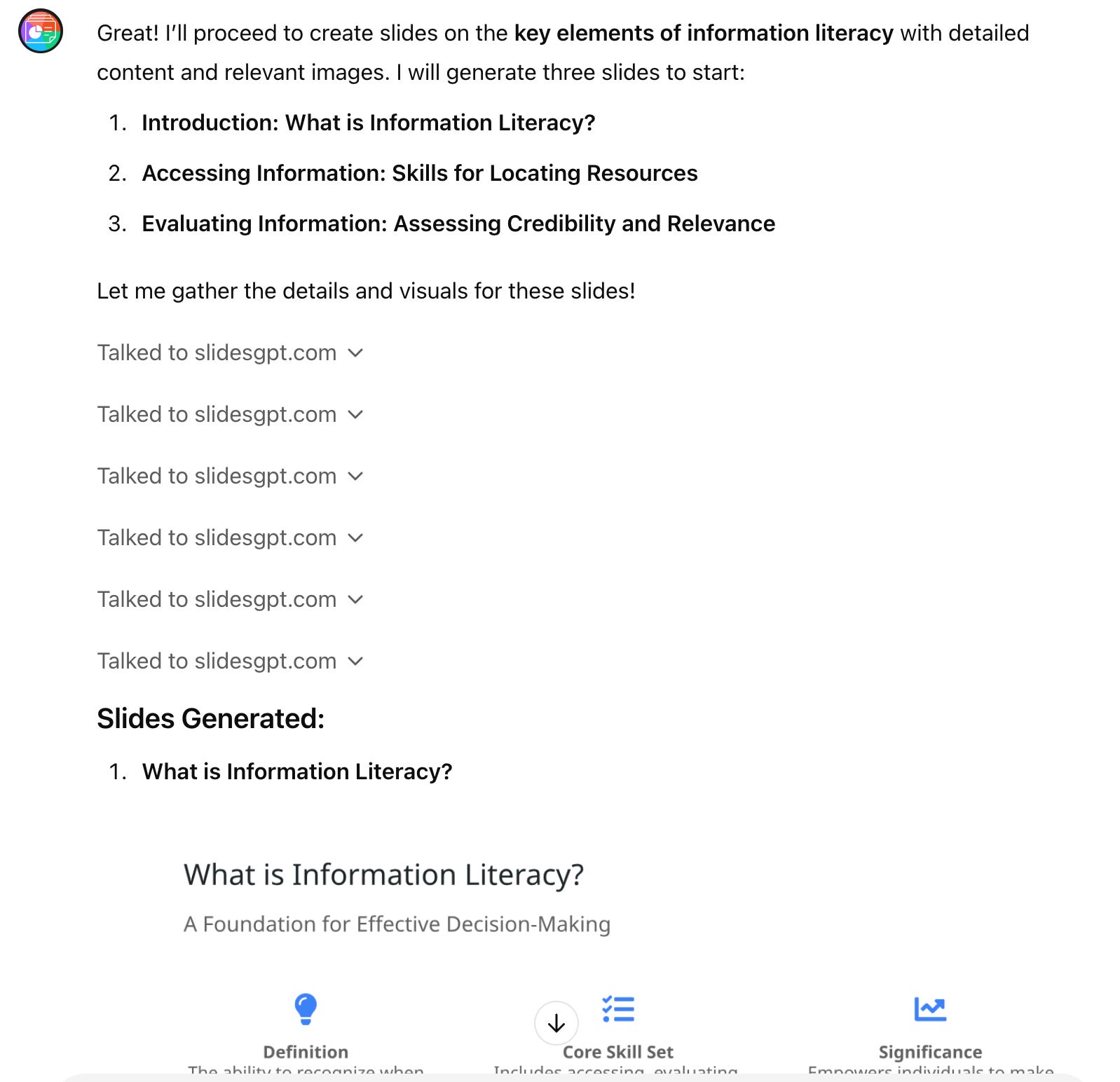
One of the generated slides:
Natural Language Conversations
Generative AI can facilitate natural language interactions within learning modules, allowing students to ask questions and receive real-time explanations. This conversational capability mimics one-on-one tutoring, providing personalized assistance as students navigate the instructional material. For example, if students are unsure about evaluating a source’s credibility, they can ask the AI for clarification and receive an immediate, contextually relevant response.
Have you ever read something about a topic that was too much for you? I often have this problem when reading legal cases or documents and creating LibGuides for law and criminal justice. Generative AI can summarize and rephrase articles into more understandable terms, which can often benefit you when you do not have the time to read an entire article or only need to read a part. However, this is also where you must be careful when using generative AI as a learning tool in a course. Students may find it as a shortcut for “reading” articles.
Gamification Elements
AI can incorporate gamification elements into learning modules to boost engagement and motivation. Features such as badges, leaderboards, and progress tracking can make learning more enjoyable and encourage students to complete modules and achieve learning milestones. For instance, completing a series of research skill modules could earn students badges to display on their academic profiles.
Software like Canva is often invaluable for these types of tasks; I also use it constantly. However, sometimes, when you have a million things to do, asking an image generator to develop a graphic is much easier and faster.
Collaborative Learning Tools
Generative AI can suggest collaborative learning by creating virtual group projects and discussion forums within the modules. AI can assign roles, suggest topics, and moderate discussions to ensure productive and respectful interactions. This fosters a sense of community and teamwork, essential skills in academic and professional settings.
Benefits of Enhanced Interactive Learning Modules
Increased Engagement: Interactive and adaptive modules keep students engaged by providing varied and responsive content.
Improved Retention: Personalized and adaptive learning paths help reinforce understanding, leading to better retention of information.
Flexibility: Students can learn independently and revisit challenging concepts as needed, accommodating diverse learning styles and schedules.
Immediate Feedback: Real-time assessments and feedback help students promptly identify and address gaps in their knowledge.
Scalability: AI-driven modules can handle large numbers of students simultaneously, ensuring consistent quality of instruction without overburdening library staff.
Multifaceted Learning Outcomes: AI is not going away, so assigning activities where students have to use AI software responsibly teaches them library and information literacy skills and prepares them with practical skills that can be used after your course and after they graduate.
Automated Feedback and Assessment
Generative AI can assist librarians in providing timely and constructive feedback on assignments related to information literacy and research projects. By analyzing student submissions, AI can highlight strengths, identify areas for improvement, and suggest resources or strategies to enhance their research skills. This would not be difficult to do either. You can ask it to summarize all student responses to find commonalities or patterns. This capability allows for more efficient assessment and supports continuous learning.
Resource Recommendations for Instruction
AI can analyze course syllabi, student inquiries, and research trends to recommend relevant library resources and instructional materials. This ensures that library instruction aligns with current academic needs and that students are directed to the most pertinent and up-to-date resources available.
I have found this extremely useful in creating learning activities in my class, That’s Fake News! Using the generative AI tool Claude, which is much more geared to academics and educators, I found engaging resources and activity ideas for college-level students that were not the typical ‘CRAAP’ test-type graphics.
Incorporating generative AI into library instruction offers academic librarians a powerful toolkit to enhance teaching and learning experiences. By leveraging AI’s capabilities, librarians can create tailored instructional materials, provide personalized support, and engage students with interactive and adaptive resources. Generative AI streamlines routine tasks, enabling librarians to focus on fostering critical thinking and information literacy skills essential in today’s information-rich world.
Moreover, AI-driven tools can expand accessibility, ensuring equitable learning opportunities for all students. While generative AI requires thoughtful implementation to address ethical considerations and maintain academic integrity, its potential to transform library instruction is undeniable. By embracing these innovations, librarians can improve their efficiency and empower students and faculty to navigate and utilize information effectively, ensuring the library remains a cornerstone of academic success in the digital age.